
Athens. The city that birthed democracy, yet somehow still debates whether souvlaki counts as a vegetable—perhaps it does, in its own greasy glory. If you’re plotting your Greek odyssey, nailing the best neighborhoods to stay in Athens isn’t optional; it’s your ticket to skipping the tourist traps and diving into the real pulse. Forget the cookie-cutter hotel chains; this Athens neighborhoods guide cuts through the chaos to spotlight where to stay in Athens that feels alive, not assembled.
Plaka? Charming, labyrinthine streets dripping with history—think ancient ruins rubbing shoulders with tavernas. But good luck finding quiet after midnight; the bouzouki players never sleep. Syntagma suits the power-walker in you, steps from Parliament, buzzing with upscale cafes that whisper “I’ve arrived,” though the traffic snarls might make you question it. Psyrri’s your gritty rebel pick—street art exploding on walls, hip bars slinging craft beer amid the market din. Too raw? Kolonaki offers polished boutiques and views that smugly overlook the Acropolis, perfect if you’re pretending not to notice the price tags.
Each spot pulls you in differently—I think Monastiraki’s flea-market vibe hooked me hardest, haggling over olive wood trinkets while the sun baked everything golden. Pick wrong, and you’re exiled to bland suburbs. Pick right? Athens unfolds, sensory and unfiltered. Your move.
Understanding Athens: It’s Not All Ancient Ruins and Gyros
Before we dive into specific neighborhoods, here’s something I wish someone had told me: Athens is a city of extremes. You’ll find streets that look like they belong in a postcard next to others that feel like they’ve been forgotten since the ’80s. The economic crisis left its mark, sure, but it also created pockets of creativity, resilience, and some seriously underrated cool.
The Athens Tourism Board will tell you the city has something for everyone, and honestly? They’re not wrong. But “something for everyone” doesn’t mean “everywhere is for everyone.” Your perfect Athens neighborhood depends entirely on what you want out of your trip.
Plaka: The Tourist Trap That’s Actually Worth It
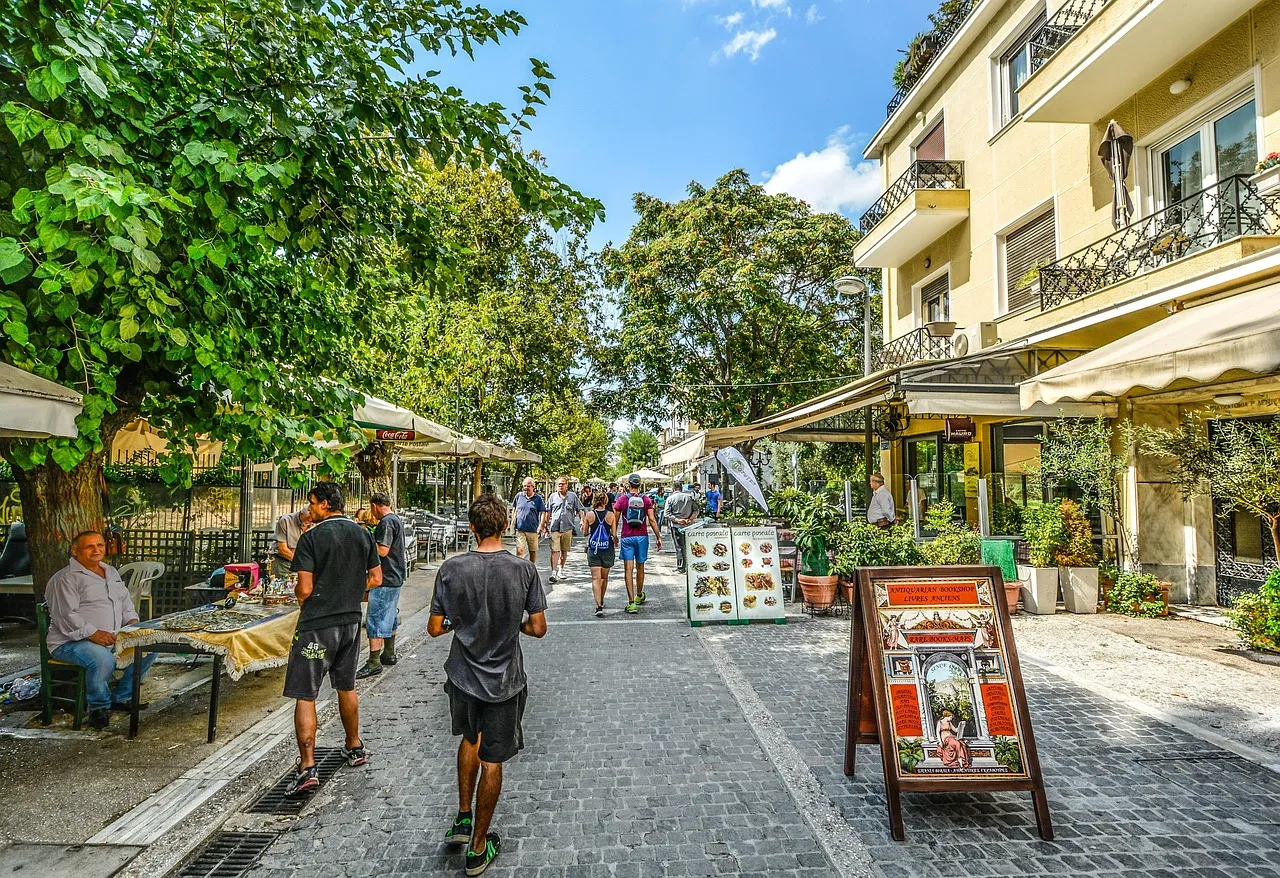
Let’s start with the obvious one. Plaka is what every first-timer pictures when they think “Athens.” Narrow cobblestone streets, bougainvillea draping over whitewashed walls, tavernas with checked tablecloths, and enough souvenir shops to stock every gift closet in the Western world.
Yes, it’s touristy. Yes, you’ll pay more for your Greek salad here than literally anywhere else in the city. But here’s the thing—Plaka is touristy for a reason. It’s gorgeous, it’s safe, and you can roll out of bed and be at the Acropolis in about seven minutes.
I stayed at a small hotel just off Adrianou Street during my second visit, and despite my initial skepticism, I loved it. There’s something magical about having morning coffee while staring up at ancient columns. The neighborhood has this almost theme-park quality after dark, with street musicians and the constant buzz of people discovering Athens for the first time.
Best for: First-time visitors, romantic getaways, people who want maximum convenience and don’t mind paying for it.
Watch out for: Restaurant touts trying to lure you in (just keep walking), inflated prices, and the occasional pickpocket in crowded areas.
Monastiraki: Where Grunge Meets Ancient Greece
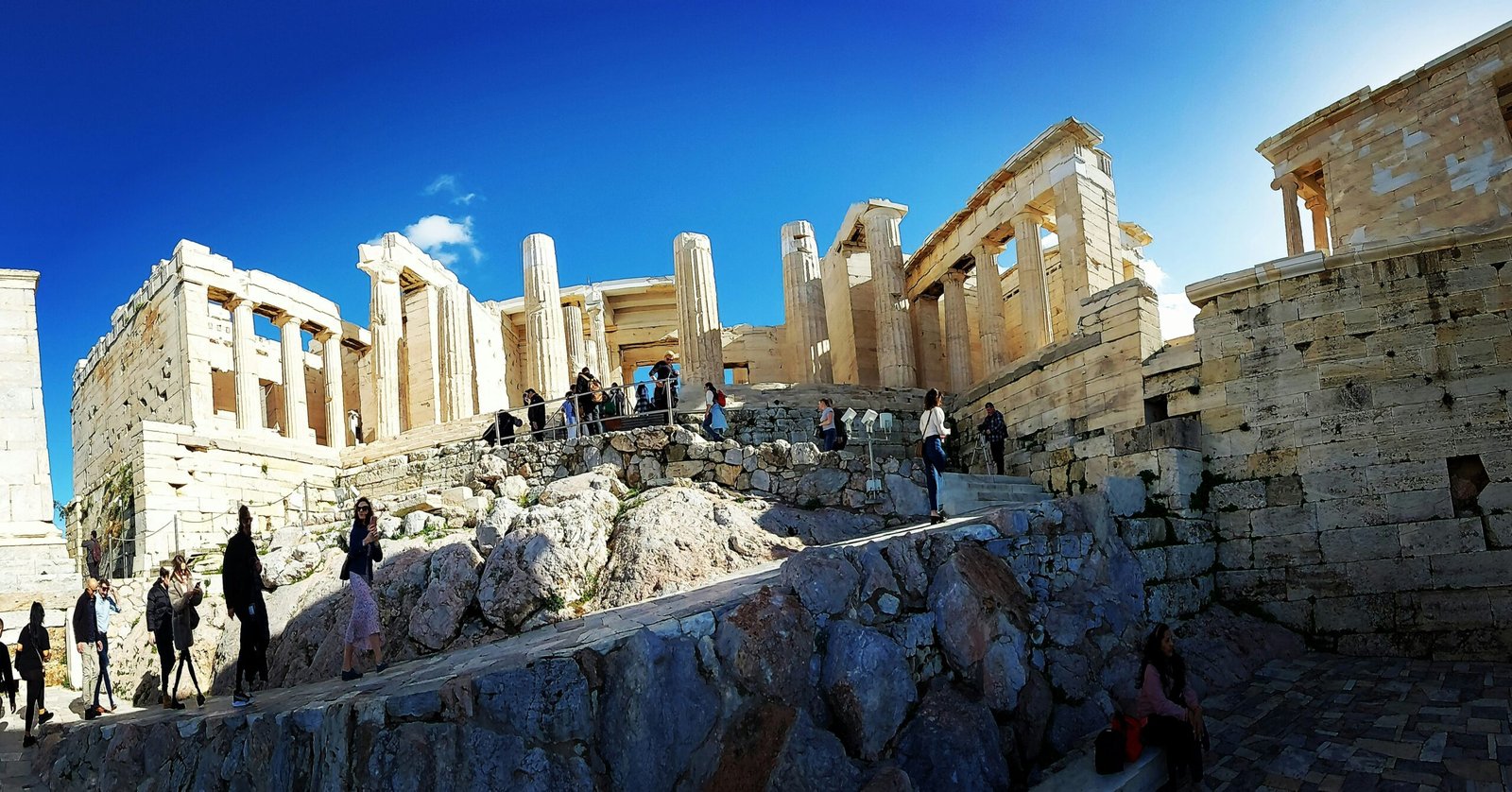
Right next to Plaka but with an entirely different vibe, Monastiraki is Athens’s answer to… well, I’m not sure what exactly. It’s part flea market, part hipster hangout, part ancient agora. The Monastiraki Flea Market happens every Sunday, and it’s the kind of chaotic, wonderful mess where you can buy vintage leather jackets, Orthodox icons, and suspiciously cheap “antiques” all in one go.
The neighborhood sits in a valley between several hills, giving you these dramatic views no matter which direction you look. The metro station here is a hub, which makes it incredibly convenient for getting around—though that also means it’s constantly busy.
I’ve noticed Monastiraki attracts a younger crowd than Plaka. Maybe it’s the rooftop bars with Acropolis views, or the street art, or just that indefinable coolness that happens when old and new collide. Hotels here tend to be boutique-ish, with more personality than polish.
Best for: Budget travelers, people who want to be in the thick of things, anyone who likes a bit of edge with their history.
Watch out for: Noise (this place doesn’t really sleep), aggressive vendors, and the fact that some side streets can feel a bit sketchy after midnight.
Syntagma: The Business District That Grew a Soul
Syntagma Square is Athens’s Times Square, minus the overwhelming advertisements. It’s where Parliament sits, where protests happen, where the metro lines converge, and where you’ll find a concentration of chain hotels that could be anywhere in the world.
Sounds boring, right? But here’s what I didn’t expect: Syntagma has become surprisingly liveable. The surrounding streets have excellent restaurants, the National Garden provides a green escape, and you’re walking distance to basically everything that matters.
I spent three nights at a hotel just off the square during a work trip, and the convenience factor was unbeatable. Need to catch a metro to Piraeus for an island ferry at 6 AM? You’re already there. Want to grab quality coffee before most tourists wake up? There’s a great spot on Voukourestiou Street.
Best for: Business travelers, people who value efficiency, anyone who wants a “normal” neighborhood feel with tourist access.
Watch out for: Protest marches (usually announced in advance), generic hotel vibes, and the fact that it can feel a bit sterile compared to other neighborhoods.

Koukaki: The Neighborhood Athenians Actually Love
Okay, this is where things get interesting. Koukaki sits just south of the Acropolis, and for my money, it’s the best neighborhood in Athens. Not the most convenient, not the most Instagram-famous, but the best for actually experiencing how modern Athenians live.
The streets here feel residential without being boring. You’ve got the Acropolis Museum at one end, the Syngrou-Fix metro station for easy access, and blocks of low-rise apartments where actual families live. The restaurants aren’t performing for tourists—they’re feeding the neighborhood.
I remember walking back to my Airbnb here one evening and stumbling onto this tiny square where old men were playing backgammon while kids kicked a soccer ball around. That’s the stuff you can’t manufacture, you know? That authentic local life everyone claims they want but usually can’t find because they stay in the wrong neighborhood.
Best for: Return visitors, people who want local flavor, couples seeking a romantic but real vibe, longer stays.
Watch out for: Limited nightlife (this is more of a daytime/early evening neighborhood), fewer English-speaking staff in some places, and accommodation that books up fast because it’s not oversupplied with hotels.
Psyrri: Gritty, Artsy, and Not for Everyone
Psyrri is Athens’s creative quarter, which is another way of saying it’s a bit rough around the edges but fascinating if you’re into that sort of thing. This neighborhood has gone through various reincarnations—industrial district, red light area, artist enclave, nightlife hub—and honestly, it’s still figuring itself out.
The streets here are covered in street art, some of it genuinely impressive. The tavernas mix old-school family operations with trendy new wine bars. And the nightlife? It’s the real deal. Not clubs playing David Guetta remixes, but places where bouzouki music drifts through alleyways at 2 AM.
I’ll be honest—I wouldn’t recommend Psyrri for everyone. My parents, for instance, would hate it. But if you’re comfortable with a bit of urban grit and want to see Athens’s creative side, it’s worth at least a night or two.
Best for: Solo travelers, artists and creative types, nightlife enthusiasts, people under 35 (roughly).
Watch out for: Drug users in certain corners (not dangerous, just present), very loud late-night noise, and the fact that it can look a bit sketchy even when it’s perfectly safe.

Kolonaki: Athens’s Fancy Pants District
If Psyrri is Athens in ripped jeans and combat boots, Kolonaki is Athens in a perfectly tailored suit. This is where wealthy Athenians live, shop, and drink €8 espressos while discussing… I don’t know, yacht maintenance?
The neighborhood climbs up the slopes of Lycabettus Hill, giving it this elevated, literally and figuratively, position above the city center. The Benaki Museum is here, along with designer boutiques, art galleries, and restaurants where you need to actually dress up.
I had coffee in Kolonaki once wearing hiking shorts and a sweaty t-shirt after climbing Lycabettus. The waiter’s expression told me everything I needed to know about the neighborhood’s dress code.
Best for: Luxury travelers, fashion enthusiasts, people who want a quieter, more refined Athens experience.
Watch out for: Prices (everything costs more here), a somewhat snooty atmosphere, and the uphill walk from the metro.
Exarcheia: The Anarchist Neighborhood with a Heart
This is perhaps the most misunderstood neighborhood in Athens. Exarcheia has a reputation as an anarchist stronghold, and yeah, that’s not entirely wrong. The walls are covered in political graffiti, police are rarely seen (or welcome), and there’s a certain anti-establishment energy that permeates everything.
But it’s also home to the National Archaeological Museum, excellent bookstores, and some of the most authentic food in the city. The neighborhood is full of students from the nearby university, intellectuals, artists, and people who’ve opted out of mainstream Greek society.
I found Exarcheia fascinating for a day visit, but I’m not sure I’d stay here unless I really knew what I was getting into. It’s safe enough during the day, but the vibe can shift at night, and it’s definitely not the polished Athens experience most first-timers are looking for.
Best for: Alternative travelers, political science majors, people who’ve already seen “normal” Athens and want something different.
Watch out for: Demonstrations and occasionally tense political situations, drug use in Exarcheia Square, and a general lack of tourist infrastructure.
Pangrati: The Hidden Gem That’s Not So Hidden Anymore
Pangrati is what happens when you cross Koukaki’s residential charm with Kolonaki’s sophistication and subtract the tourist crowds. This neighborhood has become increasingly popular with expats and digital nomads, which has both improved the restaurant scene and, let’s be real, started to change the character a bit.
The Panathenaic Stadium (where the first modern Olympics were held) sits at one edge of the neighborhood, and the whole area has this tree-lined, slightly faded elegance that I find incredibly appealing. It feels like Athens circa 1960, frozen in amber but slowly warming up.
Best for: Medium-term stays, people seeking authentic but comfortable, foodies (seriously, the restaurant scene here is excellent).
Watch out for: Limited metro access (you’ll want to get comfortable with buses or walking), fewer hotels (mostly Airbnbs and apartments), and the fact that it’s becoming trendy, which means it won’t stay this way forever.
Metaxourgio: The Neighborhood in Transition
I’m including Metaxourgio with a caveat: it’s changing fast, and I’m not entirely sure what it’s changing into. Traditionally a working-class immigrant neighborhood, Metaxourgio has started attracting artists, galleries, and the inevitable wave of “urban renewal” that follows them.
Parts of it are genuinely cool—especially around the National Theatre and the newer art spaces. Other parts are still pretty rough. I’d stay here if I were visiting for the second or third time and wanted to see a side of Athens that’s not in the guidebooks, but I wouldn’t recommend it for a first visit.
Best for: Adventurous repeat visitors, people interested in urban development and gentrification, artists looking for inspiration.
Watch out for: Significant variance in safety from block to block, limited traditional tourist amenities, and the feeling that you might be contributing to displacement of longtime residents.
Thissio: The Quiet Achiever
Thissio tends to get overlooked because it doesn’t have a single defining characteristic. It’s not the most central, not the most beautiful, not the cheapest. But perhaps that’s exactly why it works so well.
The neighborhood wraps around the Ancient Agora, giving you serious historical cred without the Plaka-level crowds. The pedestrian street of Apostolou Pavlou connects you to Plaka and offers some of the best Acropolis views in the city. And there’s a Sunday morning flea market that’s more locals-focused than Monastiraki’s tourist circus.
I stayed here during a solo trip and found it to be the perfect base—close enough to everything, far enough from the chaos, and just interesting enough to make me want to explore the surrounding blocks.
Best for: Solo travelers, people seeking a balanced experience, anyone who wants proximity without pandemonium.
Watch out for: A somewhat sleepy vibe after dark, limited nightlife options, and the fact that accommodations can be hit or miss in terms of quality.
So Where Should You Actually Stay?
After all that, you probably want me to just tell you where to book, right? Fine, here’s my completely biased recommendation system:
First-timers: Plaka or Koukaki. Plaka if convenience and atmosphere outweigh budget concerns, Koukaki if you want something more real but still accessible.
Budget travelers: Monastiraki or Thissio. Both offer good value and central locations without making you feel like you’re compromising too much.
Couples: Koukaki or Pangrati. Romantic without being cliché, with excellent restaurants and that lived-in Athens feel.
Party people: Psyrri, maybe with a night or two in Monastiraki. Just pack earplugs and embrace the chaos.
Luxury seekers: Kolonaki, hands down. Though honestly, if you’re splurging, consider a rooftop suite in Plaka instead—you’ll get the service with better views.
Long-term stays: Pangrati or Koukaki. You’ll want somewhere you can actually live, not just visit.
The Practical Stuff Nobody Mentions
A few final observations from someone who’s made most of the mistakes already:
The Athens metro is your best friend. Seriously, it’s clean, efficient, and cheap. Choose a neighborhood within walking distance of a station and your life becomes exponentially easier.
Don’t underestimate noise. Athens is loud. If you’re a light sleeper, invest in good earplugs and maybe request a room facing away from the street. Or just embrace it and pretend the 3 AM garbage trucks are adding ambiance.
The Acropolis is visible from like half the city. Don’t overpay for a view you can get by walking two blocks to a public square.
Summer heat is no joke. If you’re visiting July or August, prioritize accommodation with actual air conditioning, not just a ceiling fan. I learned this the hard way in a Koukaki apartment that turned into a Easy-Bake Oven after noon.
Final Thoughts (Because Apparently I Have More)
Look, I’ve probably made Athens sound more complicated than it needs to be. In truth, you could randomly pick any of the neighborhoods I’ve mentioned and have a great time. The city is compact enough that a “wrong” choice isn’t a disaster—it’s maybe a 20-minute metro ride to course-correct.
But if you’re like me, you want to get it right the first time. You want to feel like you’re experiencing Athens the way it deserves to be experienced, not just checking it off a list. And that starts with choosing the neighborhood that matches your actual travel style, not the one that looks best on Instagram.
Athens isn’t perfect. It’s chaotic, sometimes frustrating, occasionally baffling. But it’s also deeply rewarding in ways that more polished European capitals somehow aren’t. There’s a realness here, a sense that you’re seeing a city as it actually is rather than as it wants to present itself.
So pick your neighborhood, book your room, and get ready for one of Europe’s most underrated city experiences. Just maybe avoid Omonia Square for your first visit. Trust me on that one.
Frequently Asked Questions
Question: What is the safest neighborhood to stay in Athens?
Answer: Plaka and Kolonaki are generally considered the safest neighborhoods in Athens, with well-lit streets, regular police presence, and tourist-friendly atmospheres. That said, most central Athens neighborhoods are safe if you exercise normal urban precautions. Avoid isolated areas late at night and keep valuables secured.
Question: Which Athens neighborhood is best for families with children?
Answer: Koukaki and Pangrati work best for families, offering residential vibes, parks, local playgrounds, and restaurants accustomed to serving children. These neighborhoods feel safer and quieter than the party-centric areas while still maintaining easy access to major attractions.
Question: How far is Plaka from the Acropolis?
Answer: Plaka sits directly below the Acropolis—you can walk from most Plaka hotels to the Acropolis entrance in 5-10 minutes. It’s literally the closest neighborhood to Athens’s most famous attraction, which explains both its popularity and its prices.
Question: Is Monastiraki good for budget travelers?
Answer: Yes, Monastiraki offers some of the best value in central Athens, with hostels, budget hotels, and affordable eateries. The trade-off is noise and crowds, but if you’re prioritizing location and cost over peace and quiet, it’s an excellent choice.
Question: What’s the best neighborhood in Athens for nightlife?
Answer: Psyrri dominates Athens nightlife, with everything from traditional tavernas to cocktail bars and late-night music venues. Monastiraki and Thissio also have decent options. Avoid Kolonaki and residential neighborhoods like Pangrati if nightlife is your priority.
Question: Can I walk between Athens neighborhoods easily?
Answer: Yes, central Athens neighborhoods are compact and walkable. You can walk from Syntagma to Monastiraki in about 10 minutes, or from Plaka to Koukaki in 15-20 minutes. The metro also connects most areas efficiently, with tickets costing just €1.40.
Question: Which neighborhood should I avoid in Athens?
Answer: Omonia Square and the area immediately surrounding it have a reputation for drug use, petty crime, and generally sketchy vibes, especially at night. While not outright dangerous, it’s less pleasant than other options. Certain parts of Exarcheia and Metaxourgio also require more street awareness.
Question: Where do locals actually live in Athens?
Answer: Locals are spread throughout the city, but neighborhoods like Pangrati, Koukaki, parts of Exarcheia, and areas outside the tourist center (like Neos Kosmos or Petralona) have the highest concentration of Athenians going about their daily lives rather than catering to visitors.
Question: Is it better to stay near Syntagma Square or Plaka?
Answer: It depends on your priorities. Syntagma offers better metro connections and a more business-oriented atmosphere, while Plaka provides more traditional charm and closer proximity to ancient sites. First-timers often prefer Plaka for atmosphere; repeat visitors may appreciate Syntagma’s practicality.
Question: Do I need to book accommodation in advance in Athens?
Answer: During peak season (June-September) and especially around Easter, yes—book at least 2-3 weeks ahead, particularly in popular neighborhoods like Plaka and Koukaki. Off-season, you’ll have more flexibility, though the best-value options still get snapped up quickly.
Question: What’s the difference between Plaka and Monastiraki?
Answer: While they’re adjacent and share some characteristics, Plaka is more polished and tourist-oriented with higher prices, while Monastiraki is grittier, more budget-friendly, and has a younger, hipper vibe. Plaka feels like a postcard; Monastiraki feels like real urban Athens with some rough edges.
Question: Are Airbnbs in Athens a good option?
Answer: Airbnbs can offer excellent value in residential neighborhoods like Koukaki and Pangrati, especially for longer stays or families needing multiple rooms. Just verify the location carefully—some listings advertise themselves as “Plaka adjacent” when they’re actually several blocks into less desirable areas.
Top Accommodation & Travel Recommendations for Athens
- Hotel Grande Bretagne – Luxury landmark hotel on Syntagma Square with rooftop restaurant and Acropolis views; Athens’s most prestigious address since 1874.
- Athens Was Hotel – Stylish design hotel in Koukaki with modern amenities, rooftop bar, and walking distance to the Acropolis Museum.
- New Hotel Athens – Contemporary boutique hotel in Syntagma featuring art installations and innovative Greek design elements.
- Electra Metropolis Athens – Upscale hotel near Syntagma with rooftop pool, spa, and restaurants serving modern Greek cuisine.
- AthensWas – Collection of boutique apartments in Monastiraki offering authentic neighborhood living with hotel-level services.
- Herodion Hotel – Comfortable mid-range option in Plaka with Acropolis views, rooftop garden, and excellent location for sightseeing.
- The Foundry Suites – Converted industrial building in Psyrri featuring artistic interiors and access to the neighborhood’s nightlife scene.
- Pame Paradiso – Quirky hostel in Metaxourgio popular with creative travelers and digital nomads seeking community atmosphere.
- St George Lycabettus – Boutique hotel on Kolonaki’s slopes with stunning city views, pool, and sophisticated restaurant.
- Athens Studios – Affordable, well-reviewed apartments in Thissio perfect for families or longer stays.
- GetYourGuide Athens Tours – Comprehensive platform for booking Acropolis tours, food walks, and day trips from Athens.
- Athens Metro Travel Cards – Multi-day metro passes offering unlimited travel across Athens’s efficient public transportation system.
- Funky Gourmet Restaurant – Two-Michelin-star dining experience in Keramikos showcasing innovative Greek gastronomy.
- Alternative Athens Tours – Street art tours, food walks, and off-the-beaten-path experiences focusing on contemporary Athenian culture.
- Acropolis Museum – World-class archaeological museum in Koukaki housing artifacts from the Acropolis; essential Athens visit.
- Aegean Airlines – Greece’s national carrier offering flights to Athens from major European and international cities.
- Ferryhopper – Easy ferry booking platform for day trips or island-hopping from Athens’s Piraeus port.
- Welcome Pickups Athens – Reliable airport transfer service with English-speaking drivers and fixed prices from Athens Airport.
- Athens Food Tour – Guided culinary experiences through various neighborhoods, introducing authentic Greek cuisine and local eateries.
- Coco-Mat Hotel Athens – Eco-conscious hotel in Kolonaki featuring natural materials, Greek products, and sustainable hospitality practices.