
There’s this moment that happens when you’re traveling—usually somewhere between day three and day five—where the novelty of tourist attractions starts to wear thin. You’ve done the museums. You’ve photographed the landmarks. You’ve eaten at the restaurants with English menus and pictures of the food. And then you wonder: Is this really it?
I think that’s when most of us realize the best parts of travel aren’t in guidebooks. They’re in the conversations you stumble into at a neighborhood café, the dinner invite from someone you met on a hiking trail, or the local who redirects you from the tourist trap to where people actually eat. Meeting locals abroad transforms a trip from a checklist into something that sticks with you long after you’ve unpacked.
But here’s the thing—connecting with people in unfamiliar places isn’t always straightforward. There are cultural tripwires, language gaps, and that peculiar dance of not wanting to seem like that tourist. So let me walk you through what I’ve learned (sometimes the hard way) about genuinely connecting with locals when you travel.
Why Bother Meeting Locals When You Travel?
Look, I get it. There’s comfort in staying within the expat bubble or sticking with your travel companions. But you’re missing out on the texture of a place if you don’t interact with people who actually live there.
Locals offer something Google can’t—context. They know which neighborhood is gentrifying, why everyone avoids that particular street after dark, and where to find the best version of whatever dish you’re chasing. They can explain why that statue exists, what that graffiti means, or why everyone seems to be protesting on Thursdays.
Beyond the practical stuff, there’s something deeply human about these connections. I’ve had a woman in Kyoto explain her grandmother’s recipe while we waited for a bus. A guy in Medellín spent an entire afternoon showing me his favorite street art, refusing payment because “you’re a guest here.” These aren’t transactions—they’re exchanges that remind you the world isn’t as divided as the internet suggests.
Plus, let’s be honest, the stories you tell when you get home aren’t about the hotel breakfast buffet. They’re about the people.
The Mindset Shift: From Tourist to Temporary Resident
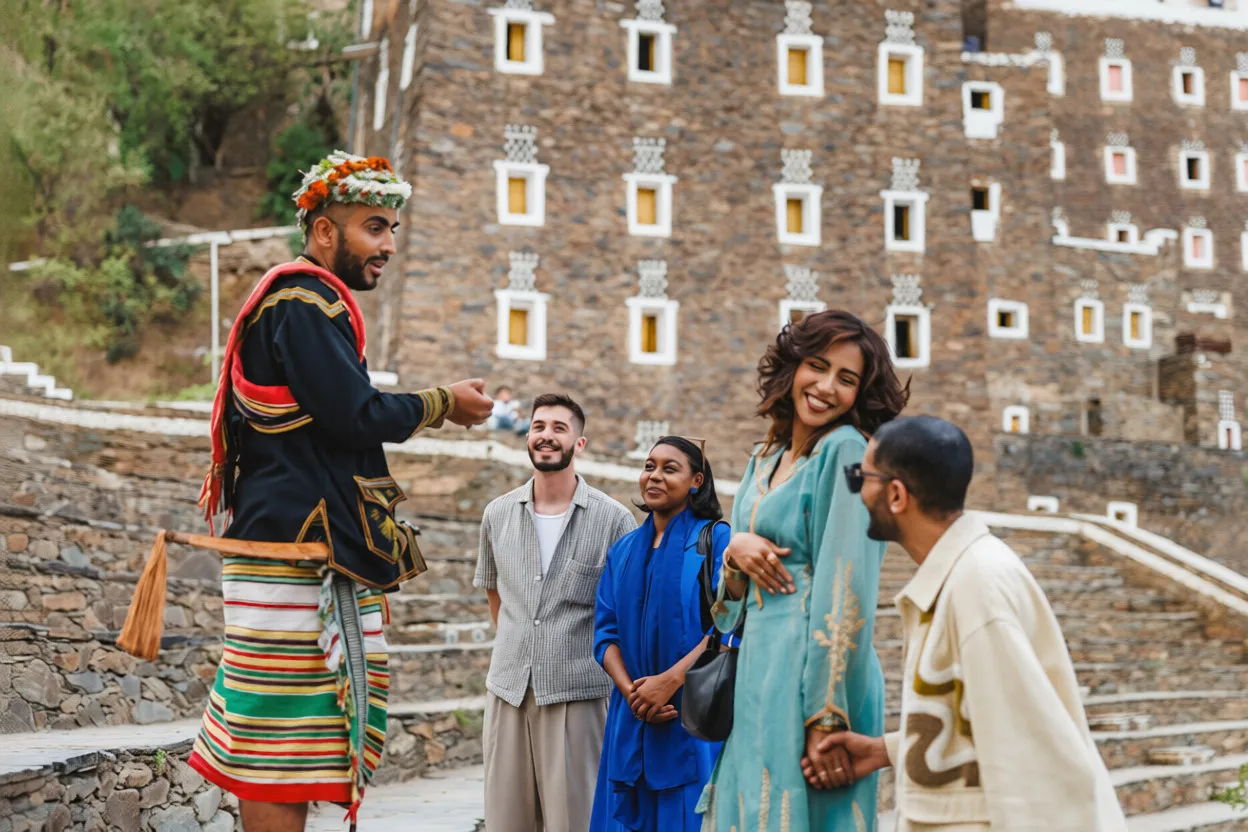
Insert image: Cultural exchange between travelers and locals
Before we get into tactics, there’s a mental adjustment that needs to happen. You need to stop visiting a place and start inhabiting it, even temporarily.
This means slowing down. I know you’ve got seven countries in two weeks or whatever ambitious itinerary you’ve constructed, but meaningful connections require time. They happen in the margins—the extra hour you spend at that café, the random festival you stumble upon because you weren’t rushing to the next attraction.
It also means approaching people with genuine curiosity rather than extraction. You’re not collecting experiences like Pokémon cards. You’re trying to understand a slice of someone else’s reality. That subtle shift in intention shows, and people respond to it.
Where to Actually Meet Locals (Beyond the Obvious)
Neighborhood Markets and Food Scenes
Tourist restaurants are fine, but the magic happens in local markets and neighborhood eateries. These are spaces designed for residents, not visitors, which means they’re inherently more authentic.
I’ve found that showing up regularly helps. Visit the same coffee shop three mornings in a row, and by day four, the barista might actually talk to you. Become a familiar face at a market stall, and vendors start recommending things or giving you the “local price” (or at least not the most inflated tourist price).
Food is a universal language, and people love sharing their cuisine. Ask questions about ingredients, preparation, recommendations. You’d be surprised how often this leads somewhere interesting.
Language Exchange Meetups and Cultural Events
Apps like Meetup and Couchsurfing aren’t just for finding places to crash—they’re goldmines for local events. Language exchanges are particularly brilliant because the whole point is conversation, and locals attend specifically to meet foreigners.
Cultural festivals, art openings, and community gatherings are also excellent. You’re there because you’re interested in something locals care about, which immediately gives you common ground.
Sports and Recreational Activities
Join a pickup soccer game. Take a local yoga class. Go on a group hike. Physical activities break down barriers faster than most things because you’re doing something together rather than just talking.
I’ve played basketball with locals in Manila, joined a running club in Barcelona, and taken salsa lessons in Cali. The beauty of these situations is that the activity itself provides structure and takes pressure off the social interaction.
Coworking Spaces and Cafés
If you’re working remotely while traveling, coworking spaces like WeWork or local equivalents are networking havens. Digital nomads and local freelancers mix naturally in these environments.
Even regular cafés work if you’re willing to be a regular. Bring your laptop, order properly (not just a water for three hours), and eventually, you’ll start recognizing faces.
Volunteering and Community Projects
Organizations like Workaway and WWOOF connect travelers with local hosts for volunteer exchanges. You work a few hours a day in exchange for accommodation and meals, but the real value is the immersion and relationships you build.
Even short-term volunteer opportunities—beach cleanups, community gardens, teaching English—put you shoulder-to-shoulder with locals working toward something meaningful.
The Cultural Navigation Part (Where Things Get Tricky)
Here’s where good intentions can go sideways. Cultural norms around social interaction vary wildly, and what works in one place can be offensive elsewhere.
Personal Space and Physical Contact
Latin Americans might greet you with a kiss on the cheek within minutes of meeting. In Japan, a slight bow is standard, and physical contact with strangers is generally avoided. Middle Eastern and South Asian cultures have complex rules around gender interaction that you need to respect.
Do your homework. Read up on basic cultural etiquette before you arrive. When in doubt, observe and mirror what locals do.
Conversation Topics and Taboos
Politics, religion, and money are generally risky unless you know someone well. Even then, tread carefully. Some cultures are more direct and debate-oriented; others prioritize harmony and indirect communication.
I once made the mistake of asking about someone’s salary in Southeast Asia—a question that felt innocuous to me but was deeply uncomfortable for them. Lesson learned.
Gift-Giving and Reciprocity
In many cultures, if someone invites you to their home or does you a favor, there’s an expectation of reciprocity. This doesn’t mean you need to match the gesture exactly, but acknowledging it matters.
Bringing a small gift when invited to someone’s home is appreciated almost everywhere. Nothing extravagant—local sweets, something from your home country, or flowers (though research flower meanings, as they can be symbolic).
Language Barriers: Less Intimidating Than You Think
I don’t speak Spanish fluently, but I’ve had meaningful conversations in Colombia using broken Spanish, hand gestures, and Google Translate. The effort matters more than perfection.
Learning basic phrases shows respect: hello, thank you, please, excuse me, and “I don’t understand” will get you surprisingly far. Apps like Duolingo and Babbel can teach you survival-level language in a few weeks.
Translation apps like Google Translate have camera and conversation modes that work remarkably well. I’ve had entire philosophical discussions using phone translations—it’s slower and sometimes hilarious, but it works.
Most importantly, don’t let language fear stop you from trying. A smile and genuine interest transcend vocabulary.
The Safety Conversation We Need to Have
Let’s be real—meeting strangers in foreign countries carries risk. That doesn’t mean you shouldn’t do it, but you should do it smartly.
Trust Your Instincts
If something feels off, it probably is. Your gut has processed more information than your conscious mind realizes. Don’t override discomfort just to be polite or adventurous.
Meet in Public First
Initial meetings should happen in public spaces—cafés, parks, restaurants. Avoid going to someone’s home or a secluded location until you’ve established trust and ideally told someone else where you’re going.
Share Your Location
Apps like WhatsApp and Find My Friends let you share your live location with friends or family. Use this feature when meeting new people.
Women Traveling Solo
Unfortunately, women need to take extra precautions. Research local attitudes toward women, dress appropriately for the culture, and be particularly cautious about alcohol consumption with new acquaintances. Join women-specific travel groups like Girls Love Travel for advice and support.
Scams Targeting Tourists
Be aware of common scams—overly friendly strangers offering to show you around who later demand payment, invitations to clubs with inflated bills, staged distractions for pickpocketing. If an interaction feels transactional or pushy, walk away.
Digital Tools That Actually Help
Technology has made meeting locals easier, though perhaps less organic. Here are tools worth using:
Social and Networking Apps
- Meetup: Find local events and interest groups
- Couchsurfing: Connect with hosts and attend local hangouts
- Bumble BFF: Friend-finding mode (works better in some cities than others)
- Tandem: Language exchange partners
- Spotted by Locals: City guides written by actual residents
Tour and Experience Platforms
- Withlocals: Book experiences with local hosts
- Eatwith: Dine in locals’ homes
- Airbnb Experiences: Local-led activities and tours
Community and Special Interest Apps
- Strava: Find local running or cycling groups
- Eventbrite: Discover local events and workshops
- Reddit: City-specific subreddits often have meetups and advice
What Not to Do (The Cringe-Worthy Tourist Behaviors)
Let me save you some embarrassment by listing behaviors that will ensure locals avoid you:
Treating people like photo props. Asking to take someone’s picture without building any rapport first reduces them to scenery. Build a connection first, then ask if they’d mind a photo together.
Being loud and entitled. The stereotype of the obnoxious American (or insert nationality) tourist exists for a reason. You’re a guest. Act like it.
Assuming everyone speaks English. English is widespread but not universal. Learn basic local phrases and ask “Do you speak English?” before launching into conversation.
Disrespecting local customs. Wearing shoes in homes where they’re removed, eating with the wrong hand in certain cultures, showing too much skin in conservative areas—these aren’t minor details.
Only reaching out when you need something. Don’t only talk to locals when you’re lost or need directions. That’s not connection; that’s using people as human GPS.
The Economics of Travel Friendship
Here’s something guidebooks don’t mention: there’s often an economic imbalance between travelers and locals in many destinations, and it affects relationships.
Be aware of this dynamic. If you’re constantly suggesting expensive restaurants or activities, you might be excluding people who’ve been kind enough to spend time with you. Offer to cover meals or drinks, but do it gracefully, without making it weird or condescending.
Also, understand that in some places, associating with tourists is economic opportunity for locals. That doesn’t invalidate the friendship, but be aware of the context. Sometimes a genuine connection and economic benefit coexist, and that’s okay.
Staying in Touch After You Leave
Perhaps the saddest part of travel friendships is they often evaporate once you leave. But they don’t have to.
I’ve maintained connections with people I’ve met traveling through simple gestures—sending a postcard later, staying in touch via Instagram or WhatsApp, or even planning return visits specifically to see them again.
Be realistic, though. Most travel connections are beautiful precisely because they’re fleeting. Not every encounter needs to become a lifelong friendship. Sometimes it’s enough that it happened at all.
My Honest Take on All This
Meeting locals isn’t about collecting authentic experiences to humble-brag about later. It’s about temporarily stepping outside your cultural bubble and recognizing our shared humanity across different contexts.
Will every interaction be profound? No. Some will be awkward, brief, or forgettable. But every so often, you’ll connect with someone in a way that shifts your perspective, challenges your assumptions, or simply reminds you that kindness transcends borders.
The effort is worth it—not because it makes you a more “authentic” traveler, but because it makes you a more complete human. We’re social creatures, and isolation in foreign places, no matter how beautiful, eventually feels hollow.
So talk to the person next to you at the bar. Join that random festival happening in the square. Accept invitations, extend invitations, and be willing to be vulnerable in the way that genuine connection requires.
The worst that happens? An awkward conversation. The best? A memory you’ll carry forever and maybe, just maybe, a friend on the other side of the world.
Frequently Asked Questions
Question: How do you meet locals when traveling alone?
Answer: Join group activities like walking tours, cooking classes, or language exchanges where locals and travelers mix naturally. Use apps like Meetup or Couchsurfing to find local events. Visit neighborhood cafés, markets, or gyms regularly to become a familiar face. Volunteering through platforms like Workaway also provides structured opportunities for connection.
Question: Is it safe to meet locals while traveling abroad?
Answer: Generally yes, with common-sense precautions. Meet in public places first, share your location with friends or family, trust your instincts, and research common scams in your destination. The vast majority of locals are genuinely welcoming, but being cautious doesn’t hurt.
Question: What’s the best way to approach locals in a foreign country?
Answer: Start with a genuine compliment or question—ask for restaurant recommendations, comment on something culturally interesting, or request help with language. Show authentic interest in their perspective rather than treating them as tour guides. Learning basic phrases in the local language demonstrates respect and effort.
Question: How can I meet locals without speaking the language?
Answer: Use translation apps like Google Translate, learn basic survival phrases, and rely on universal communication like smiles, gestures, and shared activities. Many people appreciate the effort even if you’re not fluent. Food, sports, and music transcend language barriers surprisingly well.
Question: What are the best apps for meeting locals while traveling?
Answer: Meetup connects you with local interest groups and events. Couchsurfing offers hangouts beyond just accommodation. Bumble BFF helps find local friends. Tandem pairs you with language exchange partners. City-specific apps like Spotted by Locals provide insider recommendations written by residents.
Question: Should I stay with locals through Couchsurfing or Airbnb?
Answer: Both can facilitate local connections. Couchsurfing is specifically designed for cultural exchange and is free, though it requires more vetting of hosts. Airbnb offers more structure and protection, and many hosts enjoy showing guests around. Choose based on your comfort level and budget.
Question: How do you make friends with locals as a tourist?
Answer: Be a regular somewhere—visit the same café, join recurring classes or meetups, participate in community activities. Show genuine interest in their lives beyond tourist attractions. Offer reciprocity—share about your culture, invite them for coffee, or bring a small gift. Be patient; friendships develop over time.
Question: What cultural mistakes do tourists make when meeting locals?
Answer: Common errors include being too loud, taking photos without permission, disrespecting dress codes or religious sites, discussing taboo topics like politics too early, not learning basic local phrases, expecting everyone to speak English, and treating locals as photo props or free tour guides rather than people.
Question: Can you meet locals through organized tours?
Answer: Yes, especially through platforms like Withlocals, Eatwith, or Airbnb Experiences that specifically connect travelers with local hosts. Small group tours led by locals also provide opportunities for genuine conversation. Avoid massive tour groups if connection is your goal.
Question: How do you respect local culture when meeting people abroad?
Answer: Research cultural norms before arrival, including appropriate dress, greetings, and conversation topics. Observe and mirror local behavior. Ask questions when uncertain rather than assuming. Learn and use basic phrases in the local language. Be humble about your own culture and genuinely curious about theirs. Listen more than you speak.
Top Travel Resources for Meeting Locals
- Meetup – Find local interest groups, language exchanges, and social gatherings in cities worldwide, perfect for connecting with both locals and expats.
- Couchsurfing – Beyond free accommodation, access local hangouts, events, and a community specifically designed for cultural exchange.
- Workaway – Exchange a few hours of work daily for accommodation and meals while living with local hosts and immersing in their lifestyle.
- Withlocals – Book authentic experiences, food tours, and activities led by vetted local hosts in destinations across Asia, Europe, and beyond.
- Eatwith – Dine in locals’ homes worldwide, experiencing authentic cuisine and conversation in intimate settings.
- Tandem – Connect with native speakers for language exchange via text, voice, or video, often leading to real-life meetups.
- Bumble BFF – Use the friendship mode to find locals with shared interests, particularly effective in larger cities.
- Spotted by Locals – City guides written by actual residents who share their favorite spots, avoiding tourist traps.
- Airbnb Experiences – Book small-group activities led by local experts, from cooking classes to street art tours.
- WWOOF – World Wide Opportunities on Organic Farms connects travelers with organic farms for volunteer work and cultural immersion.
- WeWork – Global coworking spaces where digital nomads and local professionals naturally mix and network.
- Strava – Track runs or rides and discover local clubs, group workouts, and active communities in your destination.
- Eventbrite – Find local workshops, concerts, festivals, and community events happening during your visit.
- Google Translate – Essential tool with camera and conversation modes that break down language barriers in real-time.
- Girls Love Travel – Facebook community offering advice, meetups, and support specifically for women travelers worldwide.
- Duolingo – Free language-learning app to build basic conversational skills before and during your travels.
- WhatsApp – Essential messaging app used globally for staying connected, sharing locations, and coordinating meetups.
- Instagram – Use location tags and local hashtags to discover events, find recommendations, and connect with locals before arrival.
- Reddit Local Subreddits – City-specific communities often organize meetups and provide insider advice from actual residents.
- Babbel – Structured language courses focused on practical conversation skills for travelers, more comprehensive than Duolingo.