
Solo female travel in Egypt? Picture this: ancient wonders whispering secrets, the Nile’s lazy glide under a relentless sun, and you, utterly alone in a sea of curious stares. Thrilling, right? Or terrifying—depending on the day, perhaps. I’ve heard the hype, the warnings, the “don’t you dare” from armchair experts back home. And yeah, Egypt’s not a sanitized spa retreat; it’s raw, chaotic, alive with hawkers yelling deals and donkey carts dodging traffic. Safety tips for women solo here aren’t optional—they’re your gritty survival kit.
Start with the basics: dress smart, not sexy—loose fabrics that scream respect, not invitation. Cairo’s streets pulse with energy, but solo at night? Sketchy vibes amplify fast. Taxi scams, aggressive touts at the pyramids, that lingering gaze in souks—these are real-life insights, not tabloid fearmongering. I think—wait, know from tales swapped over sheesha—that gut instinct trumps Google every time. Stick to tourist hubs like Luxor or Aswan for breathing room, hire female guides when possible, and share your itinerary with someone reliable. Warnings? Sexual harassment happens, more than we’d like; it’s cultural friction, not personal vendetta. But Egypt rewards the bold—pharaohs didn’t build empires playing safe. Navigate wisely, and those temples hit different. Solo, fierce, unforgettable.
Understanding Egypt as a Solo Female Traveler
Egypt isn’t a monolith. Cairo feels like organized chaos had a baby with ancient history. Luxor is surprisingly chill and tourist-friendly. Alexandria has this Mediterranean breeziness that makes you forget you’re in Africa altogether. And the beach towns like Dahab? They’re basically backpacker havens where solo female travelers are as common as overpriced smoothie bowls.
The safety concerns you’ve heard about—harassment, scams, aggressive vendors—they’re not entirely unfounded. But they’re also not the whole story. Context matters. Preparation matters. And honestly, your attitude matters more than you’d think.
Before You Go: The Unglamorous Prep Work
Do Your Visa Homework
Most nationalities can get a visa on arrival at Egyptian airports for about $25 USD. But—and this is important—always check the official Egypt e-Visa portal before you fly. Rules change, and the last thing you want is to be that person holding up the immigration line because you assumed TikTok had the latest info.
Travel Insurance is Non-Negotiable
I know, I know. It feels like throwing money at problems that probably won’t happen. But when I got food poisoning in Aswan (thanks, mystery street meat), my World Nomads travel insurance covered the doctor visit and medication without me having to sell a kidney. Get it. Use SafetyWing if you’re on a tighter budget—they cover longer-term travelers too.
Dress Code Reality Check
Here’s where I’m going to sound like your aunt for a second: cover up. Not because you have to morally or religiously, but because it makes your life so much easier. Loose pants, maxi skirts, shirts that cover your shoulders and chest—this isn’t fashion oppression, it’s strategic comfort.
I tried the “I’m a liberated Western woman” approach in Cairo for exactly one afternoon. The stares, the comments, the unwanted attention—it was exhausting. The next day, I wore loose linen pants and a long-sleeve cotton shirt, and suddenly I was basically invisible. Magic.
Safety Tips That Actually Matter
Accommodation: Location Trumps Everything
Don’t just book the cheapest hostel on Hostelworld because it has “character.” Location matters immensely. In Cairo, stay near Downtown or Zamalek—neighborhoods with established tourist infrastructure. In Luxor, anywhere near the East Bank works. Check Booking.com reviews obsessively, especially those from solo female travelers.
My Cairo stay at Australian Hostel Cairo was perfect—right in the middle of everything, female dorm available, and the owner treated solo women like his personal responsibility (in a sweet, not creepy way).
Transportation: Your Uber is Your Best Friend
Download Uber the second you land. Egyptian Uber works differently than back home—drivers might call you to confirm pickup spots, and they sometimes prefer cash. But it’s still safer and more transparent than random taxis.
For longer distances, use Go Bus for intercity travel. They’re reliable, affordable, and far less sketchy than negotiating with taxi drivers at bus stations.
[Insert image of Egyptian transportation options here]
The Harassment Issue: Let’s Not Dance Around It
Yes, harassment happens. Catcalls, following, inappropriate comments—it’s real, and it’s annoying as hell. But it’s also largely manageable with the right strategies.
What worked for me:
- Wearing a fake wedding ring (got one for $3 on Amazon)
- Carrying myself with confidence, even when I felt lost
- Learning to say “La’ shukran” (no thank you) firmly and repeatedly
- Using noise-canceling headphones as a “leave me alone” signal
- Walking with purpose, not wandering aimlessly
What didn’t work:
- Smiling politely at everyone (apparently that’s an invitation?)
- Engaging with street vendors who “just want to practice English”
- Wearing visible expensive jewelry or constantly checking my phone
The harassment isn’t as bad as the internet makes it sound, but it’s also not negligible. Think of it like street harassment in New York or catcalling in Rome—unpleasant, but survivable with the right mindset.
Scams: The Greatest Hits
Let me save you some money and frustration. Here are the scams I encountered or narrowly avoided:
- The “Friendly” Local: Someone approaches you, speaks perfect English, offers to show you around “for free.” Three hours later, they’re demanding payment or dragging you to their cousin’s papyrus shop.
- The Broken Taxi Meter: Always negotiable. Always. Agree on a price before getting in, or use Uber.
- The “Closed Today” Scam: You’re walking to a major attraction when a helpful local tells you it’s closed for prayer/holiday/renovation. Would you like to see this other amazing place instead? (Spoiler: it’s a tourist trap shop.) Just ignore and keep walking.
- Overpriced Souvenirs: That “authentic” papyrus is probably banana leaves. Those “handmade” scarves are from China. The spice prices are inflated 500%. Bargain aggressively, or better yet, buy from fixed-price shops.
The Touristy Stuff (That’s Actually Worth It)
Cairo: Controlled Chaos
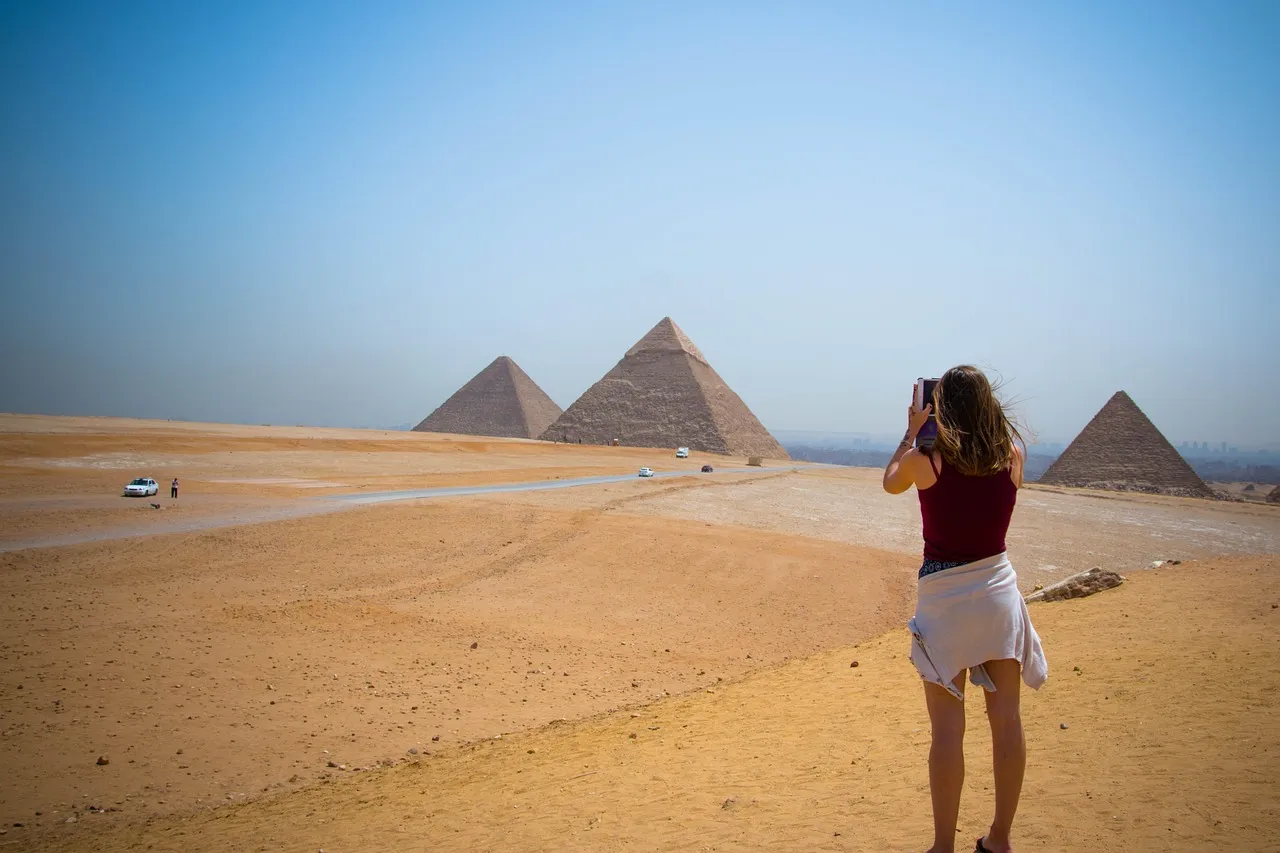
The Egyptian Museum is overwhelming in the best way—thousands of artifacts, minimal organization, pure treasure hunt vibes. The Pyramids of Giza are… well, they’re the Pyramids. You can’t not see them. Book through GetYourGuide for a decent tour guide who’ll handle the camel-ride hustlers for you.
Khan el-Khalili market is sensory overload—go in the evening when it’s less scorching, bring minimal cash, and prepare to practice your bargaining skills.
Luxor: History Nerd Heaven
If Cairo is chaos, Luxor is controlled antiquity. The Valley of the Kings, Karnak Temple, Hatshepsut’s Temple—this is where Egypt really hits you emotionally. I cried at Karnak. Not ashamed to admit it.
Stay on the East Bank, rent a bicycle (yes, really), and explore at your own pace. Solo female travelers are everywhere here, so you’ll never feel conspicuous.
Aswan: The Chill Alternative
Aswan is slower, warmer (literally—it’s scorching), and somehow more welcoming. Take a felucca ride on the Nile at sunset. Visit Philae Temple. Consider the overnight train to Abu Simbel (book through Watania Sleeping Trains) to see Ramses II’s temples at sunrise.
The Red Sea: Where You Actually Relax
Dahab is backpacker central—diving, snorkeling, beach bumming. Sharm el-Sheikh is more resort-y but still fun. Hurghada is somewhere in between. Solo female travelers are incredibly common here, and the vibe is far more relaxed than mainland Egypt.
Practical Stuff Nobody Tells You
Money Matters
Egypt is largely cash-based outside major hotels. Withdraw Egyptian pounds from ATMs in large amounts (they have withdrawal limits that’ll make you cry). Keep small bills for tips, taxis, and street food. The National Bank of Egypt ATMs are most reliable.
SIM Cards Are Essential
Get an Orange Egypt or Vodafone Egypt SIM card at the airport. Data is cheap, coverage is decent, and having Google Maps in your pocket is a game-changer.
Food: Trust Your Nose
Street food is delicious and usually safe—if the place is crowded with locals, you’re probably fine. Koshary (Egypt’s national dish—carbs on carbs on carbs) is vegetarian and amazing. Ful medames (fava beans) for breakfast will change your life.
Bottled water only. Seriously. Your stomach will thank me.
Best Times to Visit
October through April is ideal—still warm, but not “melting into the sand” hot. Avoid summer unless you enjoy 45°C temperatures and tourist site closures.
When Things Go Wrong (A Personal Tale)
Remember that food poisoning I mentioned? It happened in Aswan, the day before my overnight train to Abu Simbel. I was legitimately considering canceling—I could barely leave the bathroom, let alone endure a seven-hour train ride.
The hostel owner (bless her) hooked me up with a local doctor who made a house call for about $15. Got medication, felt human-ish within hours, made my train. The kindness I received that day—from the hostel staff, the doctor, even random travelers who checked on me—reminded me that solo travel isn’t really solo. You just have to let people help sometimes.
The Honest Truth About Solo Female Travel in Egypt
Is Egypt challenging for solo female travelers? Sometimes, yeah. The harassment can wear you down. The constant bargaining gets exhausting. The cultural differences require adjustment.
But is it dangerous? Not really—at least not more than most places. Is it worth it? Absolutely. One hundred percent.
Egypt isn’t easy, but it’s extraordinary. The history, the landscapes, the moments when everything clicks and you’re standing in front of a 4,000-year-old temple thinking “I can’t believe I’m actually here”—that feeling makes every awkward interaction, every navigation mishap, every moment of doubt completely worth it.
You’ll figure out your rhythm. You’ll learn which streets to walk down and which to avoid. You’ll develop your own strategies for dealing with vendors and your own preferences for accommodation. And somewhere between your first pyramid and your last sunset over the Nile, you’ll realize that you’re not just surviving Egypt as a solo female traveler—you’re thriving.
Essential Packing List for Egypt
Let me save you some suitcase space and regret:
Clothing:
- Lightweight, loose-fitting pants (at least 3 pairs)
- Long maxi skirts
- Long-sleeve cotton or linen shirts
- One “nice” outfit for fancier restaurants
- Comfortable walking shoes (not sandals for temple exploring)
- Flip-flops for hostels
- Light scarf (doubles as temple cover-up)
- Hat with good sun coverage
Tech & Documents:
- Power adapter (Egypt uses 220V, Type C/F plugs)
- Portable charger
- Copies of passport and visa
- Emergency contact list
Health & Safety:
- LifeStraw water bottle (filter tap water in emergencies)
- First aid kit with anti-diarrhea medication
- Sunscreen (SPF 50+)
- Hand sanitizer (obsessively)
- Tampons/pads (bring from home—Egyptian options are limited)
Comfort Items:
- Eagle Creek packing cubes (life-changers)
- Earplugs (Egyptian hotels are loud)
- Sleep mask
- Neck pillow for long bus rides
[Insert image of organized packing setup here]
Top Travel Resources & Bookings
Accommodation:
- Booking.com – Best for hotels and guesthouses
- Hostelworld – Solo traveler connections
- Airbnb – Apartments in Cairo/Alexandria
Transportation:
- Go Bus Egypt – Intercity travel
- Watania Sleeping Trains – Overnight Cairo-Aswan
- Uber Egypt – Essential for cities
- 12Go Asia – Multi-transportation booking
Tours & Activities:
- GetYourGuide – Vetted tours with reviews
- Viator – Wide selection of experiences
- Egypt Tailor Made – Custom itineraries
- Memphis Tours – Established tour operator
- World Nomads – Comprehensive coverage
- SafetyWing – Budget-friendly for long-term
- Allianz Travel Insurance – Reliable mainstream option
Money & Communication:
- Wise – Best exchange rates for currency conversion
- Orange Egypt – Tourist SIM cards
- Vodafone Egypt – Reliable network coverage
Diving & Water Activities (Red Sea):
- Blue Hole Dahab – Famous diving spot
- Emperor Divers – Professional dive centers across Egypt
- Orca Dive Club Dahab – Beginner-friendly diving
Useful Apps:
- Maps.Me – Offline navigation essential for Egypt
- Google Translate – Download Arabic offline
- XE Currency – Real-time exchange rates
Frequently Asked Questions
Is Egypt safe for solo female travelers?
Answer: Yes, Egypt is generally safe for solo female travelers who take reasonable precautions. The main challenges are harassment and scams rather than violent crime. Stick to tourist areas, dress modestly, use registered transportation, and trust your instincts. Millions of women travel Egypt solo every year without serious incidents.
What should I wear as a female traveler in Egypt?
Answer: Loose-fitting clothing that covers shoulders, chest, and knees. Long pants, maxi skirts, and long-sleeve shirts work best. A light scarf is useful for entering mosques. Modest dress significantly reduces unwanted attention and shows cultural respect.
How much does a solo trip to Egypt cost?
Answer: Budget travelers can manage on $30-50 per day including hostels, street food, and public transport. Mid-range travelers spend $70-120 daily for better hotels, restaurants, and private tours. Flights, visa ($25), and major site tickets (Pyramids: ~$20, Valley of Kings: ~$15) are additional costs.
Can I drink alcohol in Egypt?
Answer: Yes, alcohol is available in hotels, tourist restaurants, and some bars, particularly in Cairo, Alexandria, and Red Sea resorts. It’s not sold in street shops and is more expensive than in Western countries. Drinking in public streets is culturally inappropriate and often illegal.
Do I need a tour guide in Egypt?
Answer: Not necessarily. Major cities like Cairo and Luxor are navigable independently, though guides provide valuable historical context at complex sites like Karnak Temple. Tours are recommended for remote areas like the Western Desert but unnecessary for beaches or markets. Many solo travelers mix independent exploration with occasional guided tours.
Is it safe to take trains in Egypt?
Answer: Yes, Egyptian trains are generally safe, especially the tourist-class sleeping trains between Cairo and Aswan/Luxor. First-class carriages are comfortable and affordable. Book through official channels like Watania Sleeping Trains. Always keep valuables secured.
How do I handle harassment in Egypt?
Answer: Stay confident, avoid eye contact with harassers, and use firm Arabic phrases like “La’ shukran” (no thank you) or “Imshi” (go away). Wearing a fake wedding ring helps. Don’t engage with street vendors or respond to catcalls. If seriously threatened, head to the nearest shop or hotel for help.
What’s the best time to visit Egypt as a solo traveler?
Answer: October through April offers pleasant temperatures (20-30°C) and comfortable sightseeing conditions. Peak season is December-February with higher prices and crowds. Summer (June-August) brings extreme heat (40°C+) and fewer tourists, but many outdoor activities become unbearable.
Can I travel solo from Cairo to Luxor?
Answer: Absolutely. Take the overnight sleeper train (7-8 hours, around $60-80), domestic flights (1 hour, $50-100), or Go Bus (10+ hours, ~$15-20). The sleeper train offers the best balance of comfort, cost, and experience. All options are safe for solo female travelers.
Are Egyptian men respectful to female tourists?
Answer: It varies widely. Many Egyptian men are respectful, helpful, and genuinely kind. Others view foreign women through problematic stereotypes fueled by Western media. Harassment (verbal comments, staring, occasional following) is common but usually stops if ignored firmly. Physical assault is rare in tourist areas with normal precautions.
Do I need travel insurance for Egypt?
Answer: Yes, absolutely. Travel insurance covers medical emergencies, trip cancellations, lost luggage, and evacuation if needed. Egyptian healthcare for foreigners can be expensive without insurance. Companies like World Nomads and SafetyWing offer plans starting around $50-100 for two weeks.
Is street food safe in Egypt?
Answer: Generally yes, if you choose wisely. Eat at busy stalls with high turnover, watch food being cooked fresh, and avoid pre-prepared items sitting out. Koshary, ful medames, and freshly grilled meats are usually safe. Avoid tap water, ice, and raw vegetables unless you’re sure they’re washed in bottled water.
Final Thoughts
Solo female travel in Egypt isn’t about proving anything or checking off bucket list items. It’s about experiencing one of the world’s most fascinating countries on your own terms, at your own pace, with your own perspective.
Will there be moments when you question your sanity? Probably. Will there be times when you wish someone else was there to share the experience? Maybe. But there will also be moments—standing alone before the Pyramids at sunset, navigating a crowded souk successfully, making friends with other travelers at a hostel, learning to bargain like a local—when you’ll feel completely, utterly alive.
Egypt rewards the brave, the patient, and the curious. Pack your modest clothes, download your apps, memorize those Arabic phrases, and go. Your mom will forgive you eventually.